
Bathroom slippers at a Boston church might help Japanese speakers follow Jesus for the rest of their lives.
Ken and Debby Milhous minister through a culturally sensitive strategy, including those slippers, to share the gospel with Japanese families in Boston. People from that least-reached Asian nation come to Massachusetts for advanced degrees or research work.
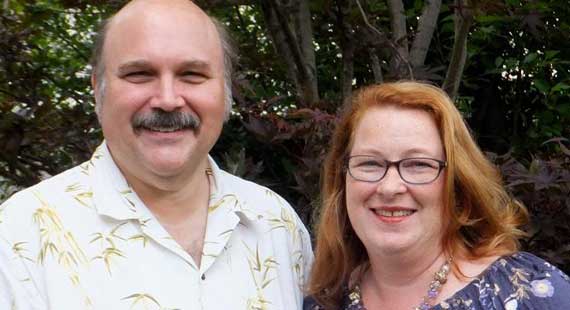
“We’re trying to match the culture of the people coming here and make them feel they’re coming home,” he said. “We want to create an environment that makes people feel like they’re back in Japan.”
Worshipers at the Japanese-speaking congregation now slip their feet into the fourth generation of slippers. The three previous sets of slippers wore out over the years since the Milhouses started the church on Easter Sunday in 1995.
Ken and Debby came to Boston as students at Gordon-Conwell Theological Seminary. During that time, they learned how many Japanese come to Boston universities. In addition, they realized the Japanese had few chances to hear the gospel in their language.
“We saw the sheer number of Japanese people coming here to study and research,” he said of their discovery in the 1990s. “We really sensed God was telling us to stay here and start a ministry presenting the gospel in the heart language of the Japanese people.”
Related: From Scattered to Gathered is an effort among least-reached peoples in America.
Culturally, Japanese people don’t wear outside shoes inside or bathroom shoes in the rest of the building. So, this church sought five dozen pairs of slippers, sound equipment, chairs and other common needs of a new congregation.
As a result, Japanese-made slippers have covered the soles of feet at church gatherings and worship services since the church started. A wooden rack inside the door of the Italian meat market turned worship space holds 60 pairs of slippers. Those slippers, plus the bathroom slippers positioned right where they belong, create a comfortable context essential to gospel ministry among the Japanese.
“We knew this would not be a normal church,” Ken added.
The church supports Japanese families as they come and go
Perhaps the most prominent distinctive of Boston Japanese Christian Church is a ministry to Japanese-speaking families, including children, who relocate to Massachusetts. Homesickness and isolation influence these families while one or more adults earn a degree. But they are also open to new ideas presented in a comfortable experience.
Ken gained insight into doing ministry among Japanese in the U.S. while in Minnesota for college. There, he attended and served in the Japanese Fellowship Church of the Twin Cities.
Related: A Minnesota church grew into a multicultural congregation by caring for those far from home.
According to Ken, many came to that church, wanting a connection with other Japanese. He recognized that many were more open to the gospel there than in Japan.
“They leave their support system” behind in Japan, he said. “We can be that support system for them and show them Christ’s love, and they get curious about what the Bible says.”
So, as students and families come and go in their academic careers, Boston Japanese Christian Church continues to bond with the visitors so the Japanese can meet the friend of sinners.
“We are perpetually planting a church,” he explained. “We’ve had many go back to Japan as Christians.”
Besides slippers, what do gospel conversations require?
When the time is right, and the Japanese are relaxing in their slippers, Ken shares the gospel within Japanese cultural norms and constructs.
To begin, the Milhouses build relationships and meet the people’s felt needs, avoiding criticizing the Japanese worldview. For example, Japanese schools teach evolution as a fact, and Shintoism includes worshiping nature. As such, Ken and Debby recognize Japanese won’t automatically think of a creator god who made the whole world.
Still, a divine creator and spiritual helpers exist in Japanese mythology: Shinto documents reference the world’s creation at the hands of a god with two divine helpers. These two helpers existed before the sun goddess, Japan’s national deity, who is said to have created the Japanese islands. Therefore, Ken said conversations about Genesis and other creation narratives can eventually be fruitful.
A pediatrician in the U.S. as her husband did medical research was one of the first people baptized at Boston Japanese Christian Church.
Ken said she came to church with an interest in the Bible while convinced her confidence in evolution meant she couldn’t become a Christian. But, over time, he said she came to faith in a creator God and Jesus as her Savior.
Her story illustrates what the Milhouses believe: Initial religious criticism against the Japanese worldview, without taking time first to build a relationship, can hinder Christian conversion among Japanese. As the relationship deepens and people also experience God’s love in the church, Ken and Debby can answer their questions about what they hear and experience.
Ken said people will, in their own time and with the Spirit’s leading, be ready to hear the gospel as they realize they need help to start a relationship with their creator God. Then Ken and Debby can illustrate how Christ is that help.
Since the Japanese word for sin primarily means crime, law-abiding people don’t quickly see themselves as needing a savior like Jesus. Therefore, the Milhouses explain sin as self-centeredness, as doing things someone shouldn’t or acting in ways that hurt others to fulfill one’s desires. Most Japanese, he said, will admit they do such things, which can lead to gospel conversations.
Reaching the Japanese is also a team effort
The Milhouses are part of the Japan Initiative, a Converge effort in Los Angeles, Boston, Tokyo and other parts of the island archipelago to make disciples who make disciples.
“We are on the same team as the missionaries in Japan,” he said. “We are united in reaching out to Japanese speakers.”
Related: Grasp the bigger picture of Converge’s initiative among the least-reached Japanese.
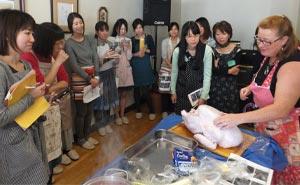
Debby has developed significant relationships through creatively engaging cultural differences for women. She said she understands women going through a cultural transition because she’s done it before. She was a high school exchange student in Kenya for a year.
Debby teaches an English conversation class for women where she brings up American cultural events like Thanksgiving or Valentine’s Day. The discussions form relationships, helping the Japanese women share profoundly personal experiences tied to marriage or parenting. These conversations can then lead to talking about God’s word.
Related: An American woman in Albania sees God opening the hearts of that country’s women.
A priority for Boston Japanese Christian Church is forming and maintaining a close connection to the network of churches in Japan that can disciple returning families. Sometimes, the Boston congregation only plants the seed that later turns into faith in Christ. The Milhouses’ ministry partners with churches in Japan to sustain discipleship to mobile Japanese as they come and go.
“The networking with churches in Japan is crucial,” he added.
A place like home may mean a home in heaven
After 27 years in ministry, the slippers have their place, but they’re just the beginning. Like a soundboard or pipe and drape, every new church needs objects that help people encounter God.
Related: Converge’s launch offering helps every new church with financial needs.
For the Milhouses, God has been faithful as visiting Japanese families navigate American life. Ken and Debby have gratitude to God for many conversations and deep relationships built over food and culture.
Most of all, Christ has helped Japanese people come to God despite or because of massive cultural differences and global relocations for a few years of their lives. As a result, the Milhouses find themselves able to do what they hoped the first time they put the slippers in BJCC’s bathroom.
“We wanted to create a place where they felt welcomed in their heart language and hear the gospel,” he said.
Converge is asking God for a gospel movement among every least-reached people group – in our generation. Learn how we play a role in accomplishing the Great Commission and how you can be involved.