
The math shouldn’t work.
Surely a blatantly Christian outreach to Muslim refugees wouldn’t have waiting lists in the hundreds or need to set a cap of around a thousand for its outreach events. Hundreds of Muslims wouldn’t be finding Jesus.
This same refugee center wouldn’t be equipping and discipling thousands of underground believers in the Middle East.
And surely their leader, Ahmad, mildly spoken and a former Muslim refugee himself, wouldn’t be legally blind.
But then again, considering the crowd-feeding, sea-parting, dead-raising Jesus he follows— God’s math does tend to favor shocking statistics.
“Blessed are those who have not seen”
Ahmad first encountered Jesus in a refugee camp via an audio Bible from a United Nations aid worker Ahmad planned to convert to Islam. Yet Ahmad, feeling suicidal, listened to the story of Thomas after Jesus’ resurrection (John 20).
Hadn’t Ahmad believed for the entirety of his life in what he couldn’t see?
“I broke down and gave my heart to Jesus,” he said. “I felt an instant peace and contentment that I was always looking for. This void in my heart [was] gone.”
Relocated to British Columbia in 2009, Ahmad longed to make Persian disciples—particularly through their most challenging times. Vancouver is home to a diaspora of approximately 200,000 transplanted Muslims, shaken loose from governments and communities in the world’s least-reached nations.
The house of hope
Theirs is a journey fraught with suffering. On top of often war-related violence and trauma forcing families from their homes,
- Many refugees are vulnerable to human trafficking, violence and hunger. One in five refugee women falls victim to sexual violence.
- Forty percent of all refugees are younger than 18.
- Many leave their homes with only what they can carry and will never see their families again.
- As many as 44% have survived torture.
- Refugees face higher incidence of depression, anxiety, post-traumatic stress disorder (PTSD) and suicide than their host nations.
- Millions lack access to basic human rights, such as medical care, education and employment. Nearly half (46%) of all refugee children are not in school.
Yet despite all this, refugees and asylum seekers carry the potential to be highly contributing members to society. In the U.S. over 15 years, refugees contributed $124 billion above the services they consumed, plus $581 billion in taxes. They tend to be highly entrepreneurial and eventual homeowners.
Ahmad’s own journey led him to marry an Iraqi believer in Canada. He then practiced social work at two government facilities, where he continued to share his faith openly…and thus continued to be relieved of his position.
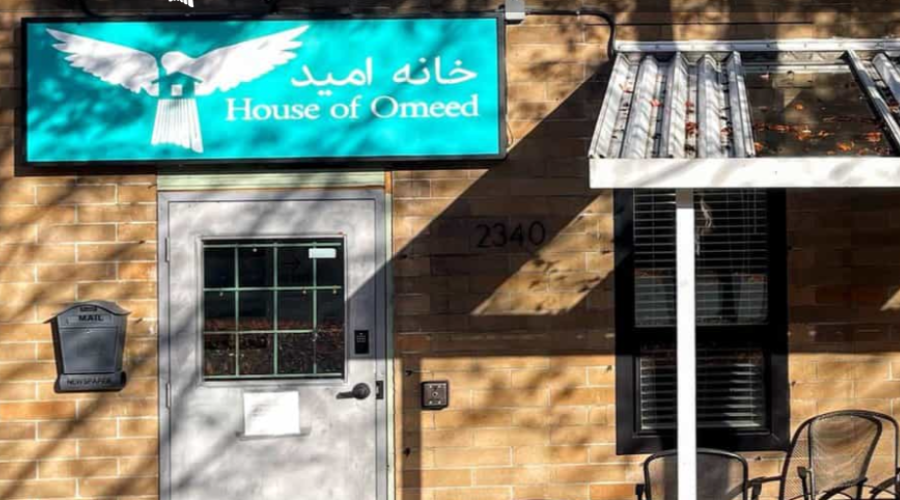
So, in 2016, Ahmad founded The House of Omeed (Persian for hope). Its goal? To “inspire hope and help in the lives of refugees and newcomers as they face the many adjustments of a new, unfamiliar and often incomprehensible society”—of dreams inevitably birthed from catastrophe.
“We do things differently”
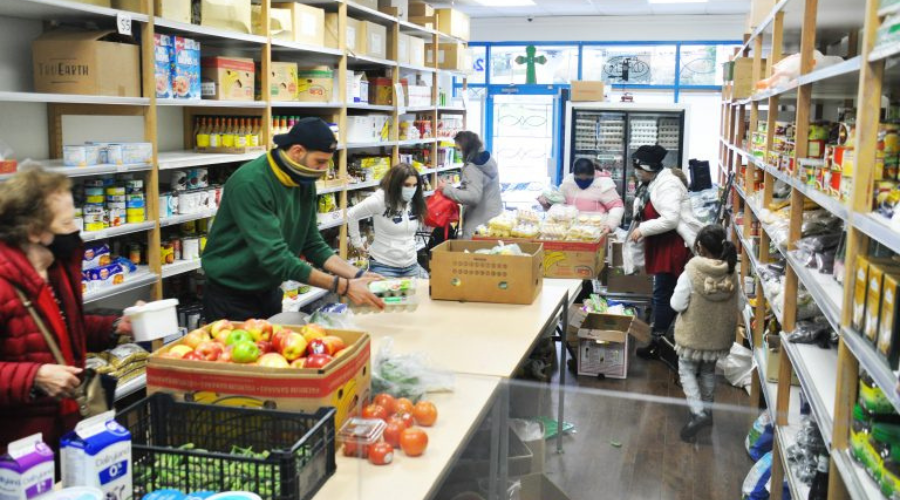
Ahmad leverages his unique cultural knowledge in services such as a culturally appropriate food bank, bilingual staff made up entirely of Middle Eastern believers, English classes, prayer and evangelism teams, food safety and first aid courses, plus assistance with housing, jobs and intimidating government paperwork.
From the start, “We decided to be a publicly Christian organization, which turned out to be a very good strategy,” Ahmad said. More radical Muslims don’t enter the center’s doors, and the ones who don’t mind expect to hear about Jesus. Despite volunteers from a dozen churches, 150 families remain on their waiting list.
In fact, the House of Omeed—an official Converge partner—performs extensive community outreach. They’ve capped their Persian New Year celebration at 1100 participants, who each receive a hamper with cultural New Year treats. The event—held during the middle of Ramadan—includes worship, games, a clear gospel message, an altar call and a church invitation.
“We see the power of community,” Ahmad says, citing the 80 people (7+% of attendees) who received Christ this year.
Their Christmas outreach, too, attracted 1000 people. Then there’s an Easter outreach for refugee kids, with stations for crafts, games and the Easter story, plus a back-to-school carnival with backpacks full of supplies.
“Would you take your kids to a Mosque for six hours a day? This is unheard of!” Ahmad marvels.
But it’s a phenomenon consistent across House of Omeed programs. “We do things differently,” he shrugs.
When hope reaches back home
It’s a strategy reaching back around the globe. “Every Muslim talks to seven people back home every day,” he explains. When they find Jesus, they speak directly into Muslim homes.
Not only that, but the House of Omeed also empowers underground believers working tirelessly in these nations through satellite broadcasts and the training of church leaders.
The House of Omeed staff includes a small team of Muslim-background believers from Iran who carry out many of the House’s programs and outreaches. They depend heavily on help from short-term mission teams from our partner churches. (Interested? Contact Ahmad.)
Ahmad speculates that two main obstacles impair the center’s reach: manpower and funding. He seeks volunteer teams, churches and donors who share the House of Omeed’s vision. (See their giving portal through Converge and reach out through the center’s website.)
Throughout Scripture, God proves himself as the opener of eyes. He warns those whose eyes can see. but are blinded.
Is it possible Ahmad might see more than most—and lead many to true sight?