

Six years ago, at the height of the coronavirus pandemic, pastor José Magaña and his wife took a 40-minute drive from their home in Turlock, California, delivering groceries to a COVID-infected worship leader from their small Spanish-speaking congregation. On the way home, José’s wife mentioned, “It would be nice if we started a food ministry.”
José nodded. “Well, you’ve got 40 minutes to pray about it.”
The Holy Spirit soon confirmed this indication. José talked with a few pastors, then drove an hour and a half to the Bay Area to gather food for food bags.
A secular non-profit offered to completely supply the ministry that is now Maná (in English, “manna”) Ministry. There was just one stipulation: José and his quickly-growing team would not share their faith. José flatly refused.
“If I can’t put the Lord first, it defeats the purpose,” he said. “You have to put Him first, then everything is good.”
Not unlike the ministry’s namesake, the Lord, José knew, would provide.
“The next day, the Lord brought us two truckloads,” he said. “Everything we get is donated from vendors who want to be a part of this.”
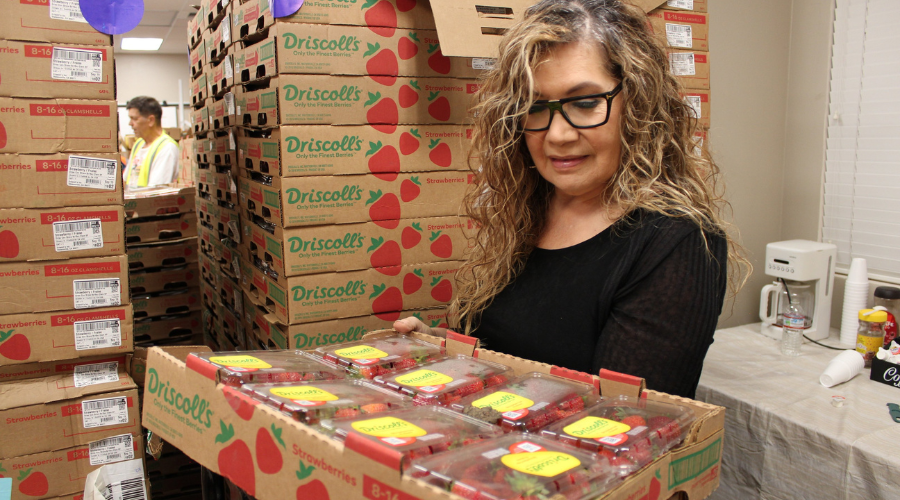
So, José began knocking on the doors of more vendors and ranchers.
“The only thing they can say is no, which is fine,” José shrugged. “Ninety-nine percent of the people who told me no now bring me big trucks of food that fill our refrigerators.”
Some farmers told José they’d offer a third of their products. One chicken processing plant donates 16 pallets of chicken per week; a dairy farm offers eight to 10 pallets; Costco provides two to three.
Not unlike Jesus’ disciples gathering 12 baskets of leftovers from five loaves and two fish (Matthew 14:20), “Sometimes we have to say no [to vendors] because we don’t have the storage!” he said. “We are now storing at other churches until we have bigger freezers or fridges.”
What began as a ministry to 10 families ballooned to meet the needs of 25, then 300. Today, after meeting the needs of the local Samaritan ministry, Salvation Army, and other gospel ministries, Maná provides a whopping 3800 people with $325-$350 per week of groceries.
Beans, rice, milk, meat, produce, oatmeal, drinks, water and juice make their way into the open arms of some of Turlock’s most impoverished families. Maná serves as many as 500 families per hour.
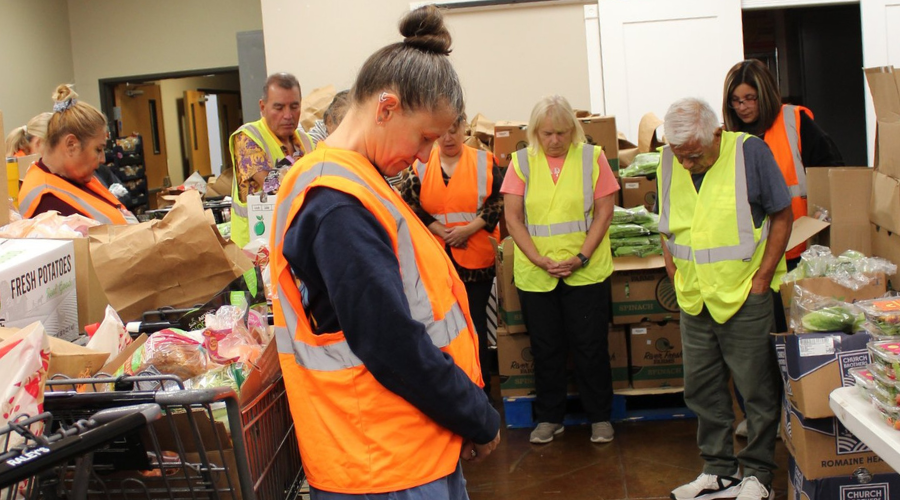
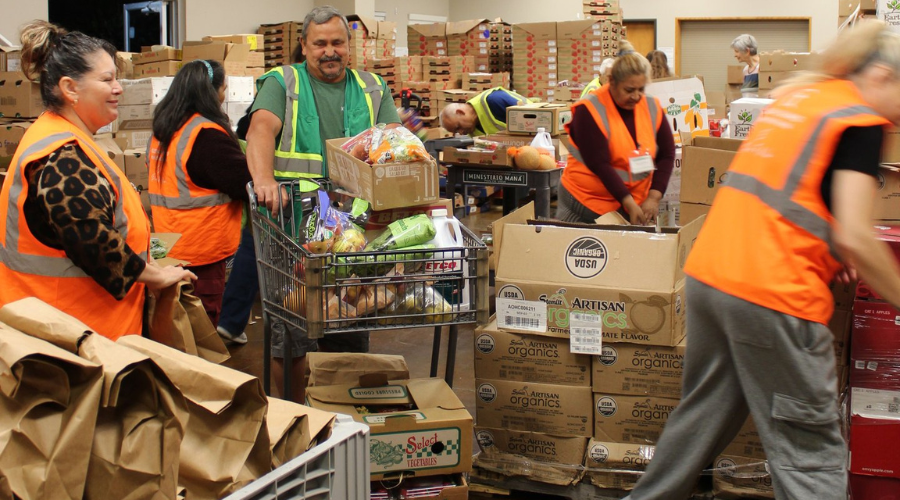
The ministry deploys 80 volunteers from nine churches, including Uber drivers, loaders, four administrators and a sizeable security team. This ministry is “better together with the whole community,” José said.
Every Thursday, a local school brings in children with Autism Spectrum Disorder, who stuff the 3800 bags according to the week’s instructions on a chalkboard. José is currently navigating much-needed architectural plans for warehouses three times bigger than those they have.
With a scope like this, this ministry attracts local news. Other charities like the Salvation Army itself come to observe in hopes of replicating Maná’s God-given success.
Each time Maná needs something — a forklift, a delivery truck, a refrigerated truck — “We pray for it. We prayed for a forklift on Sunday; on Monday, we got it for free. Every piece of equipment has been donated.”
And the sustenance of families doesn’t stop with food or equipment. José’s staff stop to pray for those with addictions, marriage problems, immigration woes.
José’s Spanish service, with 25-40 members in 2020, required a second and now possibly a third service. Their sanctuary only seats 400, and 700-800 now regularly attend, including its Bible studies and prayer times.
“I used to wonder, ‘How do we get all these people inside the church?’” José said. “So when people were waiting in line one night, I told them, ‘We’re going to have a service.’ People didn’t want to come in, because they didn’t want to lose their spot.”
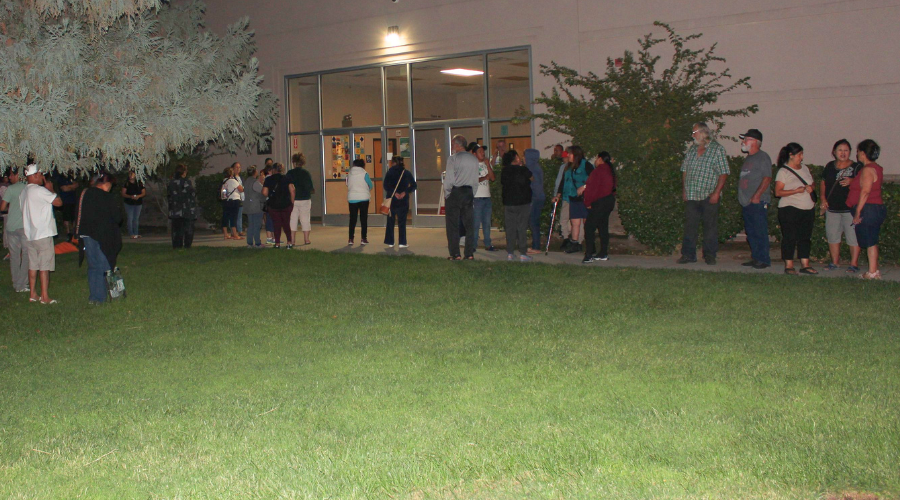
José prayed about this, and decided to give numbers to those standing in line. “If you go to church, you won’t lose your spot,” he’d tell them. The next week, the service bloomed to 150 attendees.
“That’s how we got them in. But now they’re not coming for the food. They’re coming for the Word.”
Last summer, the church baptized 78; this past spring, another 20. Regular revivals bring many to Christ, and every Wednesday night, the gospel is shared. On Thanksgiving, José and his crew closed Maná, yet the service was more packed than when Maná was giving away food. They ended up passing out over 1800 turkeys.
José also sees Maná as an opportunity to “speak life, and offer an embrace of hospitality and lack of judgment to the immigrant community.”
José, who is learning Arabic, doesn’t give pork to their Muslim families, whom he seeks to love well.
“We’ve had four or five Muslims who’ve converted to Christianity,” he said. “I’ve been threatened by a local imam,” he smiles with a small degree of pride.
This doesn’t mean burnout doesn’t beckon.
“There are weeks when I’m like, I’m so tired. I can’t do this. But then, a woman will say, ‘I haven’t eaten’—and when we hand her bags of food, her kids are jumping up and down. Their fridge is now full. Or there’s someone who accepts the Lord.
“You think you’re going to bless someone, but I’m the one who comes out blessed. I cry every other week, ‘Lord, why do you give me this? I’m not worthy.’”