

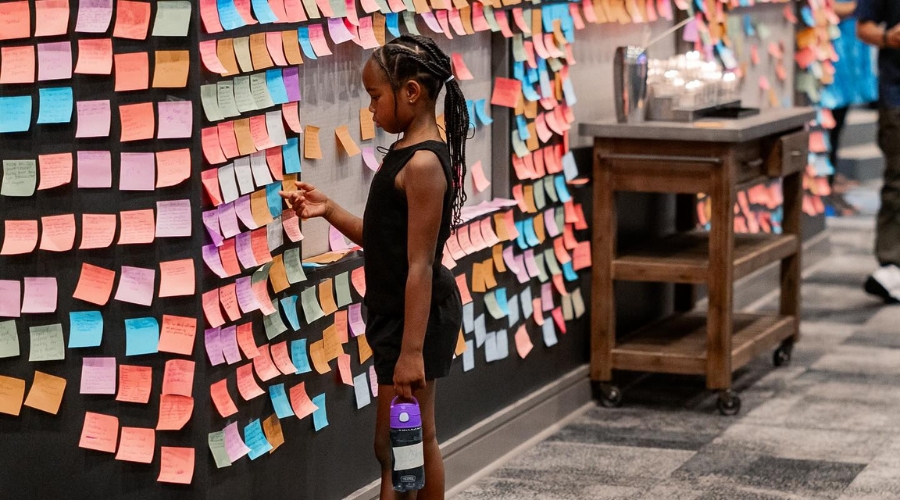
Imagine for a moment the sound of hundreds of teenagers, neighbors, friends and church members walking around you, praying aloud their most heartfelt requests. Some lift hands. Sticky notes cover every wall, scrawled with anonymous pleas to God: for issues of health, for the lost, for circumstances the asker can’t see a way out of—unless He moves.
This moment isn’t just a daydream at Heartland Church, a multiethnic, multigenerational, multidenominational church in Fishers, Indiana.
Senior Pastor Dr. Darryn Scheske feels the surrounding staggering realities. Some sources indicate that, post-COVID, roughly 51 million more Americans now attend church infrequently or not at all. That’s like totaling—then doubling—the entire population of New York City, Houston, Los Angeles and Indianapolis.
But though some Americans may feel done with God, God isn’t done with America. Another study reports that only 30% of kids raised as atheists stay that way. And half of global teens see Jesus as trustworthy, wise and loving, reports Barna; about six out of 10 are motivated to discover more about Him.
Though church attendance may be declining, Scheske points out, Jesus is trending, demonstrating Jesus’ promise in John 12:32: “And I, when I am lifted up from the earth, will draw all people to myself.”
Heartland is getting a front row seat.
Through over 2000 survey respondents—from a church bursting at the seams after building four years ago—Heartland learned that congregants are hungry for more reverence and more discipleship.
“People—young people—have said they just want to experience being in the presence of God, no entertainment required,” Scheske explains.
His congregation expressed their longing to be engaged: to participate, lead and serve, rather than be distracted.
21 Days of Fasting and Prayer: Really? (At 6 A.M.?)
It’s one reason Scheske received a text from the father of a teenager at dawn. What’s going on? My teenager is waking me at 5:37 a.m. and asking me to take him and his buddies to church. On a Friday.
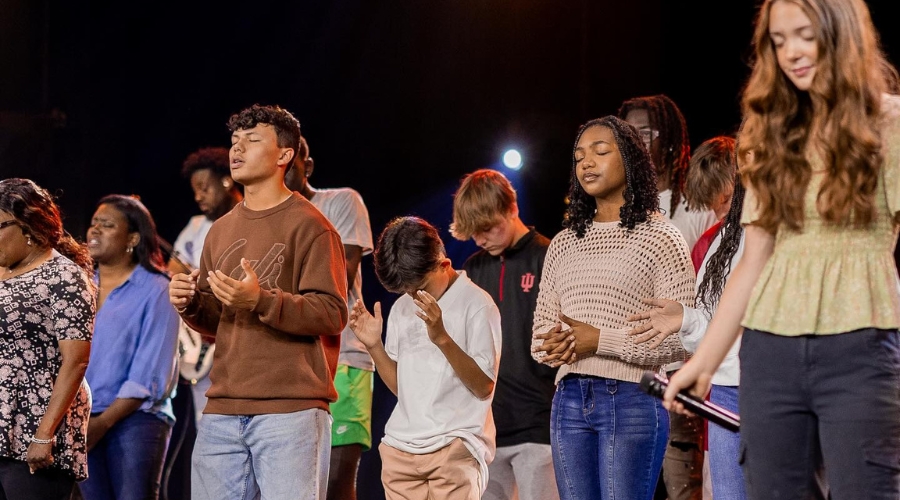
Twice yearly for three weeks—at the new year and the beginning of the school year, in efforts to put God first—hundreds flood in the doors at 6 a.m., or 9 o’clock on Saturdays. They pray together for close to an hour.
“You have to be in the room to experience the zeal, energy and spiritual passion in that room,” Scheske says. “There’s a sense of spiritual presence and enlightenment. You see the raw outpouring of hearts.”
And Gen Z assumes a central role. Heartland hosts only one monthly student night. But the church began to structure its services to regularly incorporate young people, whom God has historically used to spark revival.
So, teens and literate kids, who church leaders have seen walk with God, read the Scripture before the sermon, like seventh-grade Jack, the teen referenced in his father’s text above to Scheske.
“Everyone looks up from their phones,” Scheske laughs. “They clap for him! I can’t get them to do that.”
Kids also serve in weekly communion and lead the congregation in prayer.
Following Jack’s short message on tenacity on student night, Scheske incorporated a condensed video of Jack’s thoughts into Scheske’s own sermon. The congregation loved it. And now, Jack’s entire family attends Heartland.
It’s a beautiful cycle. Scheske believes all the prayers in January for the lost—roughly 60% of the gathered sticky notes from the 21 Days of Prayer—recently led to the need for six overflow rooms for Easter attendants. And Heartland’s strategic incorporation of Gen Z and Alpha tugs more and more of them into the 21 Days.
21 Days: How Does It Work?
There’s some logic behind the 21 days. It’s how long Daniel’s prayer led to a breakthrough in a spiritual battle (Daniel 10). And it’s been suggested that completing an action for 21 consecutive days could make it a habit, something leadership longed for in Heartland’s congregation.
They began with a committed core of 30-50 staff and key volunteers. The experience left them more intimate with God and each other, yearning to repeat it and share.
“It ignites something,” says Scheske.
They realized that for more to attend, they’d need to accommodate work and school schedules by meeting at 6 a.m.
At the event’s next cycle, attendance hit 200.
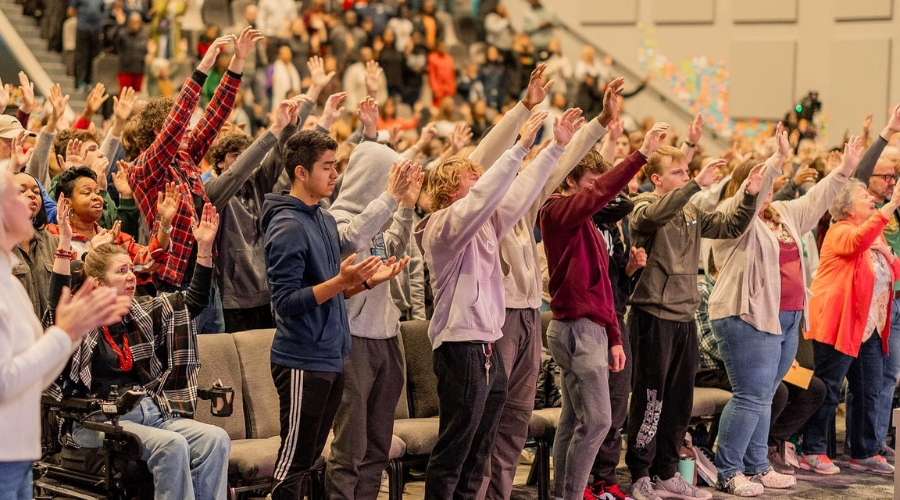
Each morning begins with five minutes of a pared-down, distraction-free time of worship, beginning with praise and thanks for who God is and what He’s already accomplished. Members of the congregation, including young people, take turns leading a brief devotion.
Then, individual prayer time encourages attendees to pray out loud, because “faith comes by hearing” (Romans 10:17). The church makes booklets available, in language simple enough for students, on how to pray using patterns of Scripture. Corporate prayer follows, and communion and worship conclude the less-than-hour-long meeting.

When Prayer Says ‘You’re Not Alone’
Sticky notes paper the walls, leaving hardly a bare spot, with requests like Amy’s.
“She wrote, ‘I lost my way after my 31-year-old daughter died from cancer last year.’ That messed me up all day,” Scheske shakes his head.
In one of the most isolated eras in all history, Scheske recognizes that these prayer gatherings hold a pastoral, comforting element beyond what church staff can accomplish. As individuals pray aloud, they realize others, too, are enduring times that pulled them to their knees.
As pastors walk around and lift up the sticky-noted requests, congregants observe leadership’s care for them.
And as various attendees lead brief devotions and corporate prayer about the Scriptures they could all pray, they join in bringing their needs to God and reflecting together on His remembrance of His people.
Scheske says attendees have told him, “‘I’m being seen. I feel connected. People care.’ It revives the soul carrying heavy burdens.”
And prayer lifts leadership’s burden of shepherding, too.
“Hearts are hard unless something in the rhythm of the church is softening them,” Scheske explains. “The rhythm of prayer helps! It fights spiritual battles.”
He refers to 2 Corinthians 10:4: “For the weapons of our warfare are not of the flesh but have divine power to destroy strongholds.”
Prayer as Lifestyle: It Doesn’t End Here
Heartland concludes the three weeks with vision. In a culture consumed by the gigabyte, people are hungrier than ever.
“What if for 21 days you went all in—to taste and see that the Lord is good?” Scheske asks. “The Bible says you’re blessed if you hunger and thirst. What if you did this for the whole year? You won’t recognize yourself a year later!”
The church continues in its prayer rhythms long after the 21 Days: monthly on the first Wednesday and every Saturday of the year. Students have posted pictures of sticky note-covered prayer walls in their own homes.
“Sunday is powerful because of what happens the rest of the week,” Scheske notes.
And this experience of passion, power, and zeal makes sense from a God who “is near to all who call on him, to all who call on him in truth” (Psalm 145:18).
What might He long to do around you?
Hey, friends! Let’s gather to celebrate 170 years of life-change this June at Converge Together! It’s an opportunity to get away, get connected and get inspired alongside other Converge pastors, ministry leaders and global workers from around the world. Bring the whole family, and join friends from across the world for three days of worship, learning, and celebration. And starting this January, you can join us for 170 Days of Prayer as we ask God for a fresh move of His Spirit in our live, our churches and our world.
