
Dr. Michael Henderson
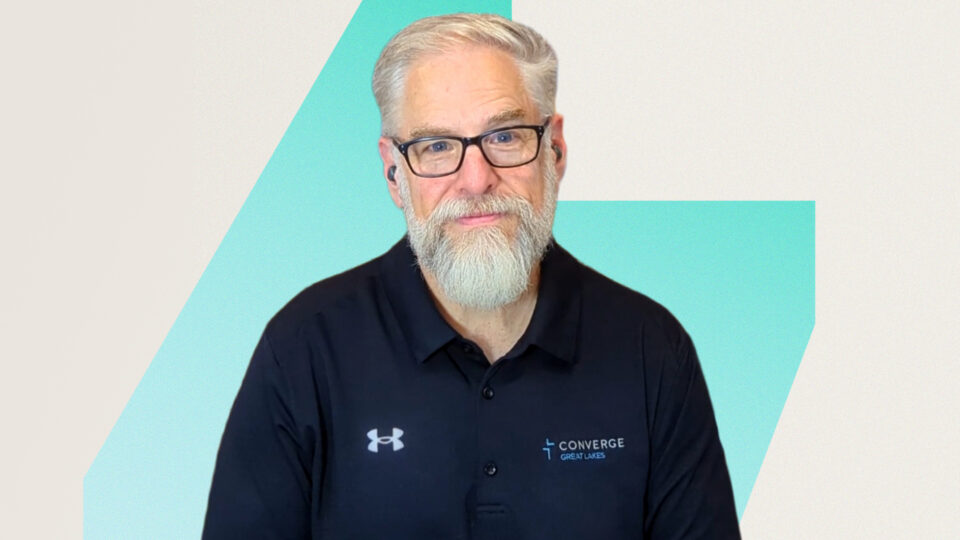
My role, my job is to introduce our speaker. In the Book of Revelation, John the Revelator is writing to the church and he’s writing to seven churches, seven churches. And to each church, he addresses an angel, the angelos, the angel of the church, they had of different cities, regions, but there was a message. And John was entrusting that message to that messenger and angel. Each angel only had one church to be responsible for, but our speaker is such an angel that he is responsible for two major churches. And so, to whom much is given, much is required, and Dr. Charlie Dates, if you don’t know him, you will know him after he finishes today. He is one of God’s angels who has spent his entire ministry bringing difficult, sometimes tough, but truth that is transforming.
I’m going to pray for him and I want you to stretch your hands and then we have a video intro and then the next voice you will hear will be that of Dr. Charlie Dates. Stretch your hands towards him. Lord, we pray for this Word that You have for Your servant, the angel of two major churches, that You would use him, speak through him. Give us the heart of God and may You calm him to be able to stand flat-footed and tell us what thus saith the Lord. Thank You for this precious angel in Your sight. In Your blessed name, amen. We’ll watch the video.
Announcer
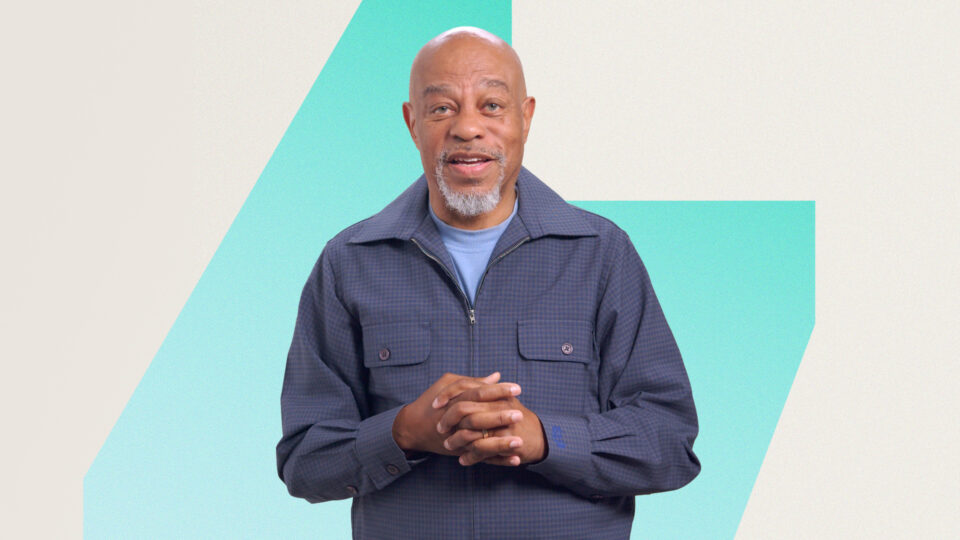
The Reverend Dr. Charlie Edward Dates is a dynamic preacher, scholar, and civic leader whose ministry bridges generational and racial divides through the powerful proclamation of the gospel. Dr. Dates serves as Senior Pastor of both Progressive Baptist Church of Chicago and Salem Baptist Church of Chicago, leading two of the nation’s most historic and influential Black congregations. Under his leadership, both churches continue to experience spiritual renewal and expanded community impact. A passionate advocate for justice rooted in righteousness, he’s the founder of several transformative initiatives, including the Black Boy Literacy Campaign and the Progressive Center for Counseling and Justice, advancing healing, education, and economic empowerment throughout Chicago. In addition to his pastoral leadership, Dr. Dates serves as co-chair of the Wheaton College Billy Graham Center Preaching Institute and teaches at both Wheaton College and Bailey University’s Truett Theological Seminary. A graduate of the University of Illinois, he earned both his Master of Divinity and PhD from Trinity Evangelical Divinity School. Dr. Dates lives in Chicago with his wife and college sweetheart, Kirsty, and their two children, Charlie II and Claire. Please stand and let’s welcome Reverend Dr. Charlie Edward Dates.
Dr. Charlie Dates
Amen, you may be seated. Thank you for your kindness. Let me rush to say thank you to, oh, I don’t even know what to call him. What do you say of the man that God uses to bless everybody? Pastor John Jenkins is a gift to the body of Christ. He is one that when time falls exhausted at the feet of eternity, the story will have to be written about his impact and his legacy in our era. And not just for the work he’s done in the DMV, but for the thousands of pastors around the world he has invested in and strengthened, and I’m one of them. And I wanna say to you and the lady, Trina Jenkins, thank God for you. We honor God for your model, your sacrifice, and your labor. And thank you for making room for people like me and Kirsty.
It’s not lost on us that y’all would show kindness to us. My wife of almost 20 years is here. We’ll celebrate 20 years in a few weeks in July and she decided to hang out with me this week. Would you stand up? Yeah, yeah. I want y’all to know that she’s mine.
A brother yesterday, he didn’t mean no harm, he didn’t see me, he walked up to her and he shook her hand and he said, “You have such a beautiful smile.” And so, I started making faces behind the guy. He didn’t mean no harm. And then she said, “Oh, there’s my husband right there.”
I know if you’ve not come in contact with an angel before, that when you see one that’s tripped from the balcony of heaven and landed on planet Earth, it’s kind of hard to contain yourself. I feel it. I know it. So I just want y’all to know, I had to stand up so that you would know. And if that brother’s here, I’m not picking on you, man, I promise you, don’t be mad. Take it as joy.
And then Dr. Tony Evans. What a faithful, stellar lighthouse of a voice that has steered the way for us these last several decades and scores, we honor you and your bride. I’m humbled and shaking in my boots that you showed up today to come be with us. And Bishop Michael Henderson, I owe you $150 for those kind words you said to me, said about me. I got you.
1 Peter 1. I wanna read into your hearing beginning at verse 22, 1 Peter 1. Our theme for this year is together and I say our because when Pastor John Jenkins became president, the Salem Baptist Church of Chicago became part of Converge. And so, we are honored to be here and I wanna, in this concluding session, ask God to breathe grace on us.
Beginning of verse 22, I want you to hear these words that Peter uses to describe the enduring, never-fading, ever abiding Word of God. He says, “Since you have in obedience to the truth purified your souls for a sincere love of the brethren, fervently love on another from the heart, for you have been born again, not of a seed which is perishable but imperishable, that is through the living and enduring Word of God. For all flesh is like grass and all its glory like the flower of grass, the grass withers and the flower falls off, but the Word of the Lord endures forever, and this is the Word which was preached to you.”
Peter closes this first chapter with the word about the ever abiding, never fading, enduring Word of God as it binds us together. I wanna tag this text this morning in our exchange, the bond that will not break. I wanna talk from the thought, the bond that will not break.
Will you breathe a Word of prayer with me, please? Our Father and our gracious God, we do thank You and praise You for Jesus Christ, our Savior, for the help and the hope that is ours in His name. I beg of You now for clarity of mind, concision of speech and conviction of heart that I may tell the truth, the whole truth, and nothing but the truth. Grant me physical strength and spiritual energy to declare Your Word. Help me not to be afraid of the faces I’m looking at and give me the grace to stand tall and stand on Your Word. And if I’ve asked You for too little, I pray You do something even bigger than what I just asked You for. In Jesus’ name, amen.
Congregation
Amen.
Dr. Charlie Dates
And when we die, our plans, our policies, and our panaceas die with us. We humans are beset by a disease. It’s a disease of temporality. We are time-bound, death-eligible creatures, and yet people everywhere in every language, every culture, and every iteration of human society grope and grasp in the darkness for something that lasts forever, but we die. And when we die, our plans, our policies, and our panaceas die with us.
Those words sent my mind moving until it landed in 1815 when Napoleon Bonaparte, who had spent the better half of his life conquering the then known world, came to a screeching halt, was put to death and had his kingdom divided up by his subjects, and a new world order emerged because not even with Napoleon, the strength lasts forever.
My mind kept moving until it landed in 1964 when a vacillating Lyndon Baines Johnson, under the pressure of a dangerous dramatization of marchers in Selma squeezed between those chocolate marchers and the Constitution of the United States, went to Congress in ’65 for a Voting Rights Act, an act that he believed would save the soul of the nation. And you would think that that act etched into legislation in 1965 would endure forever, would hold in perpetuity. But just this year, the Supreme Court took aim at that Voting Rights Act because not even the statutes of the world’s largest and strongest democracy can fend off the erosion of passing time.
Church, no one’s word lasts forever. No one’s work endures for all times. No government’s decrees linger endlessly. It’s a fact. A certainty of our nature and a rhythm we’ve come to accept and yet people everywhere, in every language, and in every culture, and every iteration of human time, people have been groping and grasping in the dark for something that lasts forever, but we wither, we fade, we die. And when we die, our plans, our policies, and our panaceas die with us.
That’s the bad news. But my guess is you didn’t show up at 11:30 this morning to hear me preach bad news. Peter gives us this morning some good news. It is the blessed encouragement that there is something that lasts. No, let me say it better. There’s something that outlasts, something that hangs on, something that when time falls exhausted at the feet of eternity, it will still be standing. There is something that survives the greatest empires, that outlives the most remarkable civilizations, and that something is the Word I’m preaching to you this morning. This Word is the enduring Word of God that will outlive our fading world.
Peter notes that this Word does not only live in perpetuity, but it binds the people of God together. I’m grateful to proclaim that to you today because even in the preaching of the Word, we give ourselves to a kind of ministry of eternity that when we get this book right, when we love one another as it proclaims we should, when we stand up and we tell it to a watching world, there’s something about our ministries that then survives when we are gone.
Did you hear me when I said it? Spurgeon is dead now, but the Word he preached is fresher than tomorrow’s newspaper. Gardner Calvin Taylor is gone now, but the promises he proclaimed still apply to us today. Billy Graham is a blessed memory now, but that gospel he preached still saves today and all of that is because there is another one who did die, but His testimony is that He’s still alive. This is the Word that Peter is proclaiming to us today lives.
Now, remember, Peter, that big fisherman from Capernaum is writing to a world that has been upset by the aggression of a government bent against the Christian faith. Peter, my favorite disciple, the disciple who invented concealed carry. The disciple who used those words that some of you use when you’re not in church. The disciple who pledged his allegiance to our Lord but went running when he was scared, and, and the disciple who had enough faith to walk on water.
This Peter is writing according to verse one to the saints that are scattered abroad. This is where we get our word scattered, we get our word diaspora from. Diaspora. These are saints who were sown throughout the world because of the persecution, they were pushed to Pontus and Galatia, Cappadocia, and Bithynia. The old church history professors used to say that the blood of the martyrs is a seed of the church, that when the pressure hit the early church, they went out, but they didn’t just go out, they carried the gospel with them.
And this is remarkable because the people to whom Peter writes are strangers to one another. They are sojourners, these are people who understood temporality with so great familiarity. Their homes were temporary. Their careers were ephemeral. Their relationships were under the gaze of uncertainty. All they had is what Dr. Evans told us last night was the gospel that gave them a new identity.
But not only that, Peter writes to a people that are divided by jealousies and hatreds of their past. The church to whom Peter writes is an unlikely fellowship, some Jews, some Gentiles, men and women of diverse nationalities, many of whom had been torn asunder by deep mutual suspicions and conflicting interest. In other words, Converge, they had no reason to be together, to do life together, or to stay together apart from the person and work of Jesus Christ.
I want to, even for those of you who don’t know me, take a risk and propose to you that Peter’s words are as applicable today as they were in the first century when he wrote them. This is tragic and comforting because the gospel is the only message that can cure, what, a diagnosis. And what Peter gives us today is not just the diagnosis, he gives us a cure.
I wanna submit to you today that there’s something wrong with American Christianity in 2026. We are as divided by race, mutual suspicion, and political allegiances as we were when Frederick Douglass wrote his autobiography in 1845. I do not say that as an angry Black man to you today, but I say it to you as a Christian who has devoted his entire life, ministry, and mind to the person and work of Jesus Christ. As a Black man who has matriculated through some of the sacred halls of our non-Black evangelical institutions, I come today as an agent of hope with the manifesto that has the power to fix what’s wrong with us.
And in the midst of his strange times, in that fading world, Peter gave that early church a strange admonition. It’s strange, Dr. Jenkins, because when life is topsy-turvy, the human inclination is to care for oneself to the exclusion of other people around you, to people you would otherwise hate, but it is into that very context that Peter writes to them the Word that I proclaim to you today, because of our redemption, we are bound not only to our Lord, but to one another. Preach, Charlie Dates.
I wanna submit to you that that’s the anchor of this text. He says, “Since you have in obedience to the truth purified your souls for a sincere love of the brethren, fervently love one another from the heart.” Friends, Peter’s confession to us today is one that says that our salvation produces within us a healthy, robust, unfeigned love of one another. In other words, Peter is saying that genuine salvation must, of necessity, produce a love of people in the fellowship of the church.
And this is remarkable because when we come to this text today, we find ourselves a part of a global church and if I may use the word glocal here in the United States, that is fractured and fissured, not because our government has broken us up, but because the church has led the way in our separation and segregation.
If I may, let me argue today from my lens in Chicago. In 1904, the Stockyard workers went on strike. In 1905, the Teamsters went on strike in Chicago. To break the picket lines, the owners of the meat-packing factories and the steel factories shipped African American people from the South to Chicago to take those jobs. This was the first time that African American people in the North got a chance at major work in Chicago.
And while that industry shifted in Chicago, the South was starting to lose its grip on Black people. The job circuit of the South was devastated in its overt racial tensions as Black people left in significant numbers. I mean significant numbers, that between 1915 and 1919, more than 500 African American people moved from the South to Chicago alone. That’s 274 Black people a day. I’m trying to say to you, they were running from something.
When the 1920 census track came out, it told us that 75% of Black people lived in 10 major tracks when 10 years prior, not even 61% made up one track, so that by 1966, there were more African American people living in Cook County than the entire State of Mississippi. Something happened.
And into that era, the Reverend Dr. Martin Luther King Jr. came to Chicago. He came to Chicago on the Freedom Festival movement. He came because there were more Black people living there than any county in the South. He wanted to test and experiment, could African American people survive if they were given quality housing and education just like everybody else? So he went on working and marching through Gage Park and organizing.
I wrote a book that’s about to come out and when I went to the Chicago History Museum to do the research on this particular movement, I was shocked at what I found. I pulled every program that Dr. King spoke at in 1966 in Chicago and I looked at every pastor’s name who was on that program and every supporting church. Do you know what I found?
It turns out that the greatest impediment to Dr. King’s protest for the betterment of our nation’s largest population of Black people at that time was not the racist mayor of Chicago, Richard J. Daley. It was not City Hall. It was not the Ku Klux Klan or the White Citizens Council. It turns out that the greatest impediment to the betterment of Black people in Chicago was the church, so drenched in politics, so divided by race, and so segregated by neighborhoods in Chicago that battled hatred within, churches fought churches. They avoided one another. They abandoned their buildings. They flew off to other neighborhoods and that’s pretty much how Chicago became divided by race and the churches not only supported it but maintained it.
Now, there were some notable exceptions converged. Pastors like L.K. Williams and T.E. Brown, and L.K. Curry, those who wrote articles that say that their ministry was passionately human and no less divine. There are those who say that, “Isn’t that chronological snobbery, Pastor Dates? To look back at a previous time and to say that we would have been on the right side of history.” But I want to tell you, there were pastors on the right side of history. And what was it that made them stand up for marginalized people? I submit to you today that they understood the gospel to mean that we must of necessity love one another. Look out for one another. Help one another. Support one another. Stand with one another. Plead for one another and stand in the gap with one another.
It was these pastors who did not go to Moody Bible Institute. They did not train at TEDS, and they were not admitted to DTS, but they had 1 Peter 1 in their hearts, a kind of indefatigable resolve that the Word of God required something of them and gave something lasting to them. They fought the color line. They fought slum lords. They fought crooked politicians, and they fought to make Chicago better and stronger, not in lieu of the gospel but because of the gospel.
I’m on my way to preach this glorious gospel of Jesus Christ. Stick with me one moment. And now here we are in the new phase of our nation, post George Floyd. Here we are where our togetherness is being tested again by our suspicions of one another. Here we are where the trouble we face is testing the tie that binds us. And so, here I am to say to you what Peter said to that early church, that genuine conversion must produce an unfeigned love of the brethren.
In other words, what Peter is arguing is that the love I am to have for you and the love you are to have for me is not sentimental, it’s sacrificial. That this love does not merely weep when another believer suffers, but this love refuses to participate in structures and decisions that perpetuate that structure and that suffering.
In other words, church, love is measured not merely by our tears that we shed in moments of crisis, but by the choices we make when those moments are gone. When George Floyd was murdered, we marched in Chicago and every ethnic group of the church in rainbow fashion marched with us. It exposed a profound moment of grief among many non-Black Christians. They lamented at the evil of racism. They confessed it. They expressed solidarity, but biblical love is tested not only by what we mourn, but by what we maintain.
If our political and social and moral commitments repeatedly leave our Black brothers and sisters more vulnerable, then our compassion was deeper than our conviction. Scripture calls us to love one another in a way that endures beyond a moment. And if we can grieve with our minority brothers and sisters one year and then turn around and support policies in another year, that deconstructs the very diversity, equity, and inclusion that gave them a chance to build generational wealth, hope and healing, then I want to submit to you today, we have more sympathy than solidarity.
And I know you don’t know me, and you’re wondering if I’m a gospel preacher and I’m wondering, “Do you believe the gospel like I do?” Because this, friends, is not about our political motivations. We respect one another’s rights to choose, but this text says that we’ve got to have something greater than a love for doctrine, we’ve got to start practicing the doctrine of love.
Peter argues, help me, Holy Ghost, “For an unfeigned, ardent devotion to one another.” In other words, what Peter says is what Stevie Wonder tried to say to us, is that, “Don’t nobody want a part-time lover.” This, friends, is a deep, meaningful love. I think you know what I’m talking about.
Let me see if I can say it this way. When I met Kirsty Elizabeth Davis then, my heart skipped two beats. I almost fell out of my chair. It’s a true story. I pinched my mother who was sitting next to me at the Krannert Center for the Performing Arts at the University of Illinois down at Urbana and I said, “Whoever she is, I need to meet her.” I remember the magenta dress she had on, the iridescent stockings she was wearing, the little bang she had cut over her eyes. And something about Adam said to me, “There’s that missing rib, bruh, go get it.”
I went to school where her mother was my professor. I took her mother’s class every semester to prove my worth to take her daughter. I did everything I knew to do. I bought dinners I could not afford. She was into the theater. I went to boring plays I could not understand. We took long, long walks and said nothing. Nothing I was doing was working.
And then I remembered that she was a child of the theater. She liked the theater. So I did what any struggling brother would do. I took a Shakespeare course. When I took that course, we were memorizing the sonnets. I got the one I knew I needed. I could have dropped the class that day. I memorized it. I tucked it away like a pearl in the pocket of my heart.
And one of those days I grabbed her, I said, “I got something I need to say to you.” We were walking down Dorner Avenue between Pennsylvania and Nevada streets. It was that almost melancholy time of day when darkness has just about taken over the light, and I grabbed her by the hand and I looked at her in the eye and I said, “Shall I compare thee to a summer’s day? Thou art more beautiful. Rough winds do shake the darling buds of May. And far too often the eye of heaven shines and often is its glory dimmed, but thy eternal beauty shall never fade nor lose possession of the fair that thou ow’s for as long as men can breathe or eyes can see, so long lives your beauty. And girl, it’s just for me.”
I stood there that day and I tried to work out of my heart in the language of Shakespeare, the movement of my affection. And you asked me, “Did it work?” July 29, it will make 20 years it worked.
But what Peter is saying to us is that Shakespeare is the poverty of speech when it comes to the kind of affection that believers ought to share one to another. We got something more than poems and rhymes. We got something more than sonnets and iambic pentameter meters. We got the blood of Jesus, the Christ, shed on a cross for the remission of sin. We have something that is greater than anything else. It is a love that will not die.
What Peter says to us now is that this love, this love is the after effect of our salvation. In other words, don’t talk about if you saved, if you’ve got no tangible demonstration of your love for somebody else.
Peter moves now. He does not only talk about the after effect of our salvation in verse 22, but in verses 23 through 25. He talks about what produced our salvation. You see, Christian love might be demonstrated by our actions toward one another, but Christian love cannot be transmitted by our actions. In other words, genuine salvation must produce a love, but the question Peter asks and answers is what produces genuine salvation. And the answer Peter gives us is the ever-enduring, never-fading, abiding Word of God.
In other words, Peter tells us that there’s something that has produced our salvation that ought to move the way we move in the world. Listen to this Word contrast that Peter uses to speak about the reliability and the time-tested source of our redemption. Peter says in verse 23, “For you have been born again not of a seed which is perishable, but one that is imperishable.” And that imperishable seed is the living and enduring Word of God. All flesh, he says, is like grass, and all its glory like the flower of grass, the grass withers and the flower fades, it falls off. But the Word of the Lord endures forever.
Everything that exists, Peter argues, is born of a seed. Fruit has a seed. Trees require a seed. Human beings require a seed and your salvation required a seed too. And the idea is that the thing born takes on the nature of the seed from which it was born. So if there’s death in the seed, then when the thing is born, it’s bound to die too.
And Peter says that the new birth is not something we do, it is something that was done to us so that the seed of the new birth produces something in our salvation that carries the integrity of the seed. Peter wants you to be sure that since your salvation was born of an imperishable seed, that your salvation will not die before you do.
I like the way Peter preaches because Peter argues that God plants the imperishable seed of His Word inside of us, that God begets in His people the seed of His own Word so that our salvation is as secure as His Word. Peter tells us of how our salvation does not come about before he tells us of how it comes about. This is how you know Peter was a preacher because Peter wanted people to know that they were lost before they knew how to get saved. He wanted them to know how it didn’t work before he could tell them how it does work. He says, “You have been born again, not of a seed which is perishable.”
My wife studied horticulture for a season in undergrad. She fell in love with these plants. Right now, Pastor Jenkins and Mrs. Jenkins, we are redoing the landscaping in front of the house and it is not cheap. You’d be amazed at how much people pay for hydrangea, for calla lilies, for birds of paradise, for blue iris, for long-stemmed roses, for Japanese maple trees, for mulch to till the soil, and to make it all look good.
So I one, as we do for Mother’s Day, one year, bought this elaborate bouquet of flowers. I brought it home and I positioned it according to the directions on the island in the kitchen, not in direct sunlight, but off to the side. I fed the flowers with that that the florist gave us, I cut the stems at the bottom to be sure that they had fresh reception of water. I was proud of my work. I was so proud that with the kids, I pulled out my phone and I said, “Hey, here we go. Let’s stand and take a picture of it right here.”
I was leaving to preach the next day. So all throughout the week, I would be able to look at those pictures. Kirsty came home, she said, “Oh, are these flowers for me?” I said, “Yes, they are for you.” I left the next day. I was gone for a few days.
I came back home, and when I got back home, she told me what she loves to tell me when I come home. I could have preached to the nations and the angels could have come from heaven and dance in the aisles. None of that matters. I could have preached like Billy Graham and saw hundreds of people come to the Lord. That matters, but it’s not that important. She looks at me and says, “Hi, dear, the trash.”
I went and grabbed that trash and I picked it up, if I may be honest with you, with a little bit of attitude. I snatched the bag and something swiped my leg as I snatched the bag. I said, “Oh no,” I opened the bag and there they were, all of the flowers that I bought for Mother’s Day were in that bag. And I looked at her and I said, “How could you?” And she said to me, “Oh dear, they were dying when you brought them in here. They do not last.”
Friends, that grabbed me because nothing we do can keep something alive that has death in the seed. But aren’t you glad today that the seed from which you’ve been born again, Peter says it will not die. It is the living and enduring Word of God. In other words, if you were to look up the word living in heaven’s thesaurus, the only synonym that heaven would have to offer you is the Word of God.
But don’t just take my word for it, pull your own testimony up in life. You can testify that the Word of God is alive because when your back has been up against the wall, when you’ve been broke, when your heart has been broken, when life did not make sense, you did not reach for old philosophy book from college or a psychology textbook, but you came to this book and you found out that this book has an answer for everything that ails you. Can I get a witness?
In this church today, I said this book is alive. Its predictions are correct. Its judgments are indisputable, its corrections are timeless. Its assertions are real. It is the backbone of science. It is more definite than the Constitution. It is the inspiration of poetry. It is the interest of music. This book will build your faith. It will fight your temptation. It will light your path. It will clarify your decisions. It will clean your conscience. Its words are wisdom and its claims are true. Time cannot age this book and ages do not time it. You have read a lot of books, but this is the only book that has ever read you. It is the very Word of God, living and full.
I say to you now, it’s not only living, church, but it’s also enduring. Are y’all listening to me here today? This Word is still around. We’re still reading Psalm 23, because the Lord still is our shepherd and we shall not want. We’re still reading Jeremiah 8 because there still is a bomb from Gilead that is able to heal wounded souls. We’re still reading Joshua 2 because that red rope that hangs from Rahab’s apartment window still preaches hope to the world today. We’re still reading Romans 10, because it’s still true that whosoever calls upon the name of the Lord will be saved. We’re still reading Psalm 27 because the Lord still is our light. He still is our salvation. We’re still read Mark 6, because Jesus still can walk on water and calm the storms of your life. We’re still reading John 10 because Jesus still moves stones so though one is dead, yet can He live, and we’re still reading 1 Thessalonians 4, because the Lord is still soon to return and the dead in Christ are going to be raised and we who are alive will be caught up together to meet Him in the air! I said we’re still reading it.
But verse 23 is not just a description of what the Word is, but verse 23 is a promise of what the Word will do. In other words, when you get the Word in you, the Word will make you living and you enduring because the Word not only births life, it sustains life. I wish I had the energy to give it to you the way I feel it in my heart. But the reason we’re still holding on is because the Word is sustaining us and I’m so glad today that God is able to sustain what God creates. I thought I’d have a few more witnesses right here that this Word has power to bring to life that which was dead, but I’m glad I brought my own witness because I didn’t know if y’all would say amen.
Before the worlds were formed, the Word of God made heaven and earth what it was. The Bible says that in the beginning, God created the heavens and the earth and the earth was without form and void, and darkness was upon the face of the deep and the Spirit of God moved upon the face of the waters and God said, you missed it, let me go on this part.
In the beginning, God created, bara, the heavens and the earth, and the earth was without form and void, and darkness was upon the face of the deep and the Spirit of God moved upon the face of the waters, and God said, “Let there be light.” The question is asked. What did God have to work with when He created the heavens and the earth?
I like the way James Weldon Johnson said it. He said, “God stepped out on nothing, looked at nothing, when the only pulpit He had was the power of His own personality. He looked at nothing and started talking to nothing but stuff started appearing because the Word of God got power.” Help me, Lord God. I’m preaching about Your life too. Some of you didn’t have it to make it through college, you didn’t have it to plant a church, you didn’t have it to reach your neighbors, but what did you have?
God stepped out on nothing. He looked at nothing. He spoke to nothing. And when He got done, stuff started appearing everywhere because God don’t need nothing to work with to bring about His righteous accomplishments. And Gardner Taylor would say it like this. He said that when God said let there be, when he got to the word let, all that was not started straining to become because in the very Word of God is the power to bring the potential out of nothingness. I thought we would pause to praise God right here that His Word has power.
I said His Word has power, the grass withers and the flower falls off, but the Word of God got power. Ask Abraham and Sarah. Abraham had snow on the roof, but no fire in the fireplace, and before Viagra or Cialis, God put his super on Abraham’s natural because the grass withers and the flower fades, but the Word of God got power.
As Joshua, as He was marching around Jericho, moving around those walls, no Pentagon, no missiles, no atomic weaponry. All He had was the Word of God and on the seventh day at the seventh time blew those rams horn and the walls came tumbling down because the grass withers and the flower fades, but the Word of God, it stands forever.
Ask Mary who never knew a man, how would she get pregnant? An angel said that God’s gonna do it and when God spoke, the seed germinated and a baby came because the grass withers and the flower fades, but the Word of God endures forever. I thought I had a church in here. Let me give you one more.
One Friday evening, they put nails in His hands and a spear in His eye, and a crown of thorns upon His head and He died. I didn’t mean to raise my voice, but He died, didn’t He die? He died. Till the earth rocked and reeled, He died. Till the moon ran down in blood, He died. Till sin apologized, but that’s not how this story ends.
But early! Excuse me, now, early! Sunday morning He got up with all power in His hands because the grass withers and the flower fades but the Word!
John K Jenkins
Somebody ought to thank God for His Word. Thank You for Your Word. I’m sorry, I can’t help myself. I don’t know about you, but I love that Word. He told you about a life-changing Word, delivering words, saving Word.
Thank you, Charlie Dates. Thank you, pastor, so much for blessing our, ain’t no better way to end than right here right now. The Lord bless you and keep you. Make His face shine upon you and be gracious unto you if the Lord lift up the light of His countenance and give you His peace. Be blessed, Converge. Amen.