

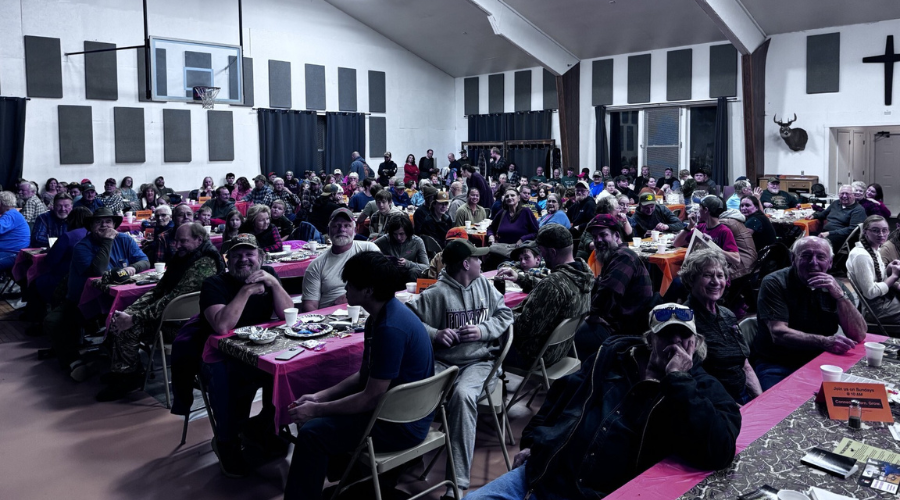
Felch Mountain Bible Chapel isn’t what you’d expect as a hotbed of relational evangelism.
Its local K-12 school district tops out at 140 students in this rural, heavily wooded, largely isolated and scrappy area of Michigan’s Upper Peninsula, 40 minutes from the nearest Walmart. Winters remain brutally cold. For years, the church’s attendance hit a ceiling of 55.
Pastor Joe Basso labored for two years to train his congregation in evangelism methods which “only seemed to leave people feeling guilty. I might have been equipping people with tools, but they didn’t have the hope. So, they weren’t excited about sharing it.”
So, Pastor Joe pivoted away from programming, to what could be called a back-to-basics strategy: “reacquainting ourselves around the gospel — how it shows up in our work, homes, marriages — and calling out its effects in our lives.” What if evangelistic flourishing lay not in methods, but through all-in absorption and dispersion of Jesus’ work?
Citing the counter-cultural, narrative-flipping example of Philemon and Onesimus, Basso believes in the “collective witness of a church that we are gifted and given to one another.”
And he describes the slow bloom of his small congregation, in its “burden to see our fathers and mothers and nephews and cousins come to faith — adding fuel to that internal fire that’s started to burn. You’re not required alone to bring someone to Jesus. This is a community.” Consider Jesus’ own words: By this all people will know that you are my disciples, if you have love for one another (John 13:35).
“When we really live out the gospel in the community, the fields become white. We need laborers,” Basso explains simply.
It worked for Felch Mountain Bible. Suddenly, new people started showing up at church.
“When we started loving each other better, on top of living out what Jesus has done in us through his death and resurrection —w e saw internal and external motivation with each other. We were excited,” Basso smiles. “I stopped saying ‘evangelize,’ and started saying ‘talk about Jesus.’ I’d tell one of our loggers, ‘I just need you to talk with your friend about what you believe.’”
Perhaps ironically, yet strategically, the church even decided to eliminate its Awana program. It seemed to be failing in long-term discipleship: No children had returned after sixth grade; no parents attended alongside — though the program churned up the capacity of half its congregation.
Instead, Basso peered into their working-class church’s unique DNA, its inlaid strengths: “Our context makes our methodology unique.” He realized their church held men who loved their homes, families and wives well. How could they turn this energy toward their region’s least-reached population: men?
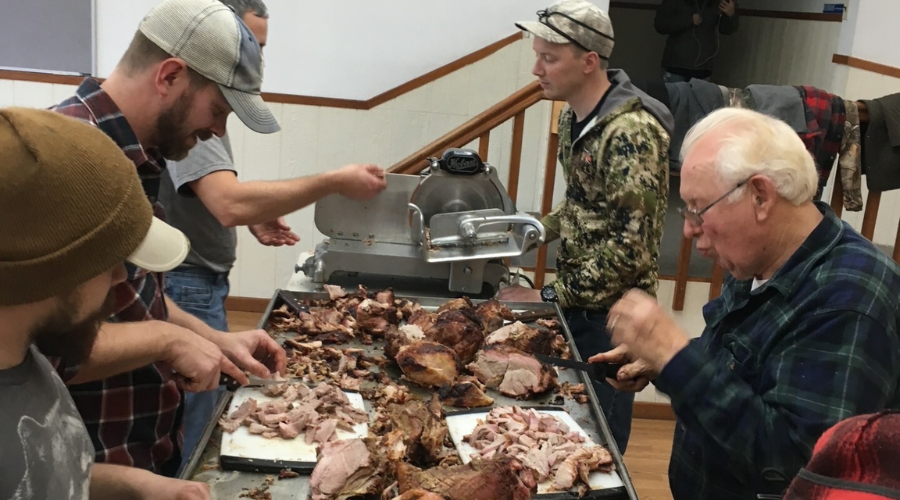
At a local restaurant’s wings night, these men began generating gospel-centered discussions over issues of tension in their community: What’s it look like to love your wife like Jesus? The church attracts even more men through its archery nights. And for a decade and a half, the congregation’s annual Hunter’s Dinner attracts a whopping 350 attendees, appealing to their rural dynamic and building trust with $1200 in giveaways. Every attendee receives multiple touches of the gospel.
The church has now doubled in size, mostly through blue-collar men bringing their families. Some drive an hour and a half on Sundays. A man who Basso had been told would never breach the church’s doors now brings five other families.
“We call ourselves the ‘family of families,’” Basso said. “We tell people, ‘I need you. You are necessary to my growth.’” In an era where most are addicted to the shallows, amusing themselves to death, “I believe that the apologetic of our era is healthy Christian community.”
In this magnetic demonstration of belonging, their mighty little church carries a vision to plant churches throughout Michigan’s Upper Peninsula.
Basso refers to a sermon series, “Ripple,” which he recently preached on 1 and 2 Thessalonians, articulating how a small church levers its impact across Macedonia and into Achaia (1 Thessalonians 1:17), a blast radius of 150 miles.
“We want to be God’s influence throughout the upper peninsula,” he said. “Our hope long-term is to train people to plant healthy churches across the U.P. Yoopers are a very specific group of people. They’re hard, but I’m wired for it. Not because I have a ministry, but because we raise up laborers.”